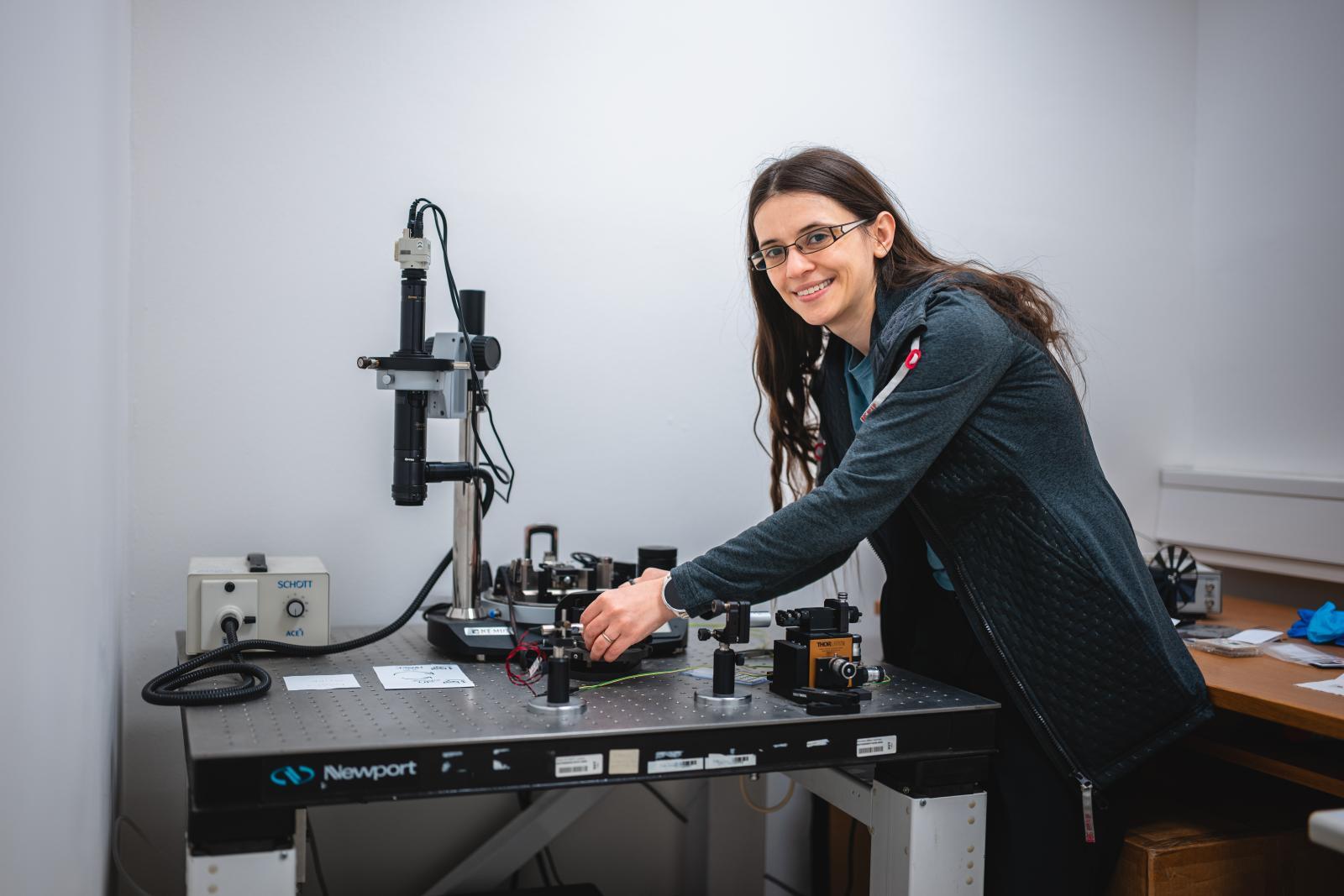
Research into advanced functional materials could pave the way for a new generation of semiconductor devices, neuromorphic computing and quantum technologies. Professor Dinara Sobola from the Faculty of Electrical Engineering and Communication at Brno University of Technology (FEEC BUT) is contributing to these developments through her research into the electrical, optical and magnetic properties of materials. Her inclusion among the world’s top 2% most-cited scientists in applied physics highlights the strength of Czech research in technologies that could shape the future of chips and microelectronics. This article was originally published by FEEC BUT.
The ranking is compiled annually by a team led by John Ioannidis of Stanford University in collaboration with the publisher Elsevier, using data from the Scopus database. Researchers are evaluated based on a composite citation indicator that takes into account not only the number of citations but also factors such as the h-index and whether the researcher is the sole, first or last author of the cited publications.
The ranking consists of two categories: career-long impact and impact over the previous calendar year. Dinara Sobola was included in the ranking for 2025, when her publications received 836 citations. In the field of applied physics, she ranked 5,220th out of 323,282 researchers evaluated, placing her among approximately the top 1.6% most-cited scientists in her field worldwide.
“I greatly appreciate seeing our research findings cited in scientific literature. This would not have been possible without my excellent colleagues and students, to whom I am grateful for their support and our joint efforts. Above all, I see this recognition as encouragement to continue my research,” says Dinara Sobola.
Her research focuses on functional materials that could contribute to the development of quantum technologies and neuromorphic electronics (electronics that mimic the functioning of the human brain). She investigates how chemical composition, atomic structure and minor defects in crystal lattices affect the electrical, optical and magnetic properties of materials. These properties could pave the way for new electronic components capable of processing and storing information differently from today’s chips.
Conventional computers separate information processing from data storage. Neuromorphic systems, by contrast, aim to integrate these functions, much like neurons and synapses in the human brain. Such systems could make use of materials whose electrical or magnetic properties change in response to external stimuli and which can “remember” previous influences.
The properties of these materials can be deliberately adjusted by modifying their composition. For example, adding a small amount of cobalt can alter the arrangement of the crystal structure, magnetic response and electrical losses. Understanding these relationships helps researchers design materials tailored to specific applications, ranging from highly sensitive sensors to new types of memory and computing devices.
Dinara Sobola collaborates with research teams from the United States, Türkiye and Jordan. This year, she has co-authored papers published in journals including Solid State Sciences, Journal of the Korean Ceramic Society and Results in Engineering.
Dinara Sobola completed her master’s degree at Dagestan State University and earned her Ph.D. at FEEC BUT. In addition to her work at the Department of Physics and CEITEC BUT, she is also affiliated with the Czech Academy of Sciences. In June 2026, she was appointed professor.
Author: Zdeňka Koubová
Photo: Jakub Rozboud