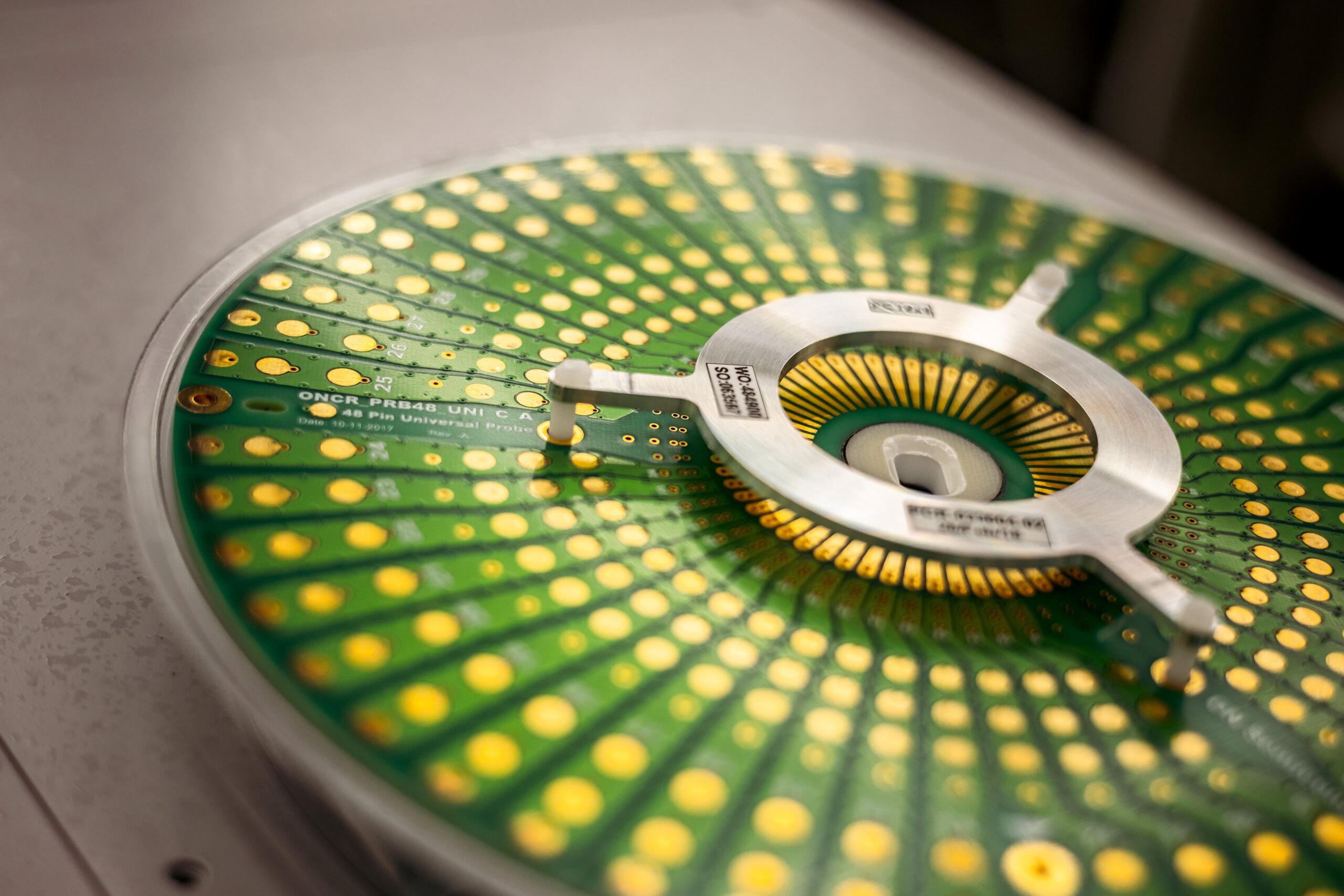
In the Czech Republic, a field that many people didn’t even know existed until recently is now on the rise. It was only reports of a chip shortage that reminded us that we have the research, technological, and manufacturing infrastructure here to gradually build a field of the future. Let’s take a look at why the Czech Republic is becoming increasingly visible on the European semiconductor map and what that means for us.
The Czech Republic has several world-class companies in the semiconductor segment in the field of designing new semiconductor solutions, developing and manufacturing semiconductor components and equipment for the semiconductor industry. By joining forces in the Czech National Semiconductor Cluster, these companies have become the foundation for the development of a functional semiconductor system that effectively connects academia, start-ups, industry, and public institutions. Synergy in the cooperation of diverse entities, highly competent in their respective fields, is the key to opportunities for us to grow into a major player at the European and global level in the coming years.
According to a recently published OECD report (Mapping the semiconductor value chain), the Czech Republic is among the European leaders in several areas of the semiconductor value chain. We excel in particular in the development of sophisticated analytical tools, microscopy, optics, and advanced sensor systems. The European Commission’s June report Digital Decade (Digital Decade 2025: Country reports) highlights the role of the Czech National Semiconductor Cluster (CNSC), which is becoming an expert authority, architect, and driving force behind the current development of the semiconductor system in close connection with the implementation of the European Chips Act.
Onsemi and Codasip are moving the Czech Republic forward
In addition to well-known global companies such as Onsemi, with its extensive production, development of new semiconductor technologies, and chip design in Rožnov pod Radhoštěm and Brno, we are also seeing growing activity in the field of research and technology transfer. In March this year, the Czech Semiconductor Center was established, which is becoming an important tool for fulfilling the goals of the National Semiconductor Strategy.
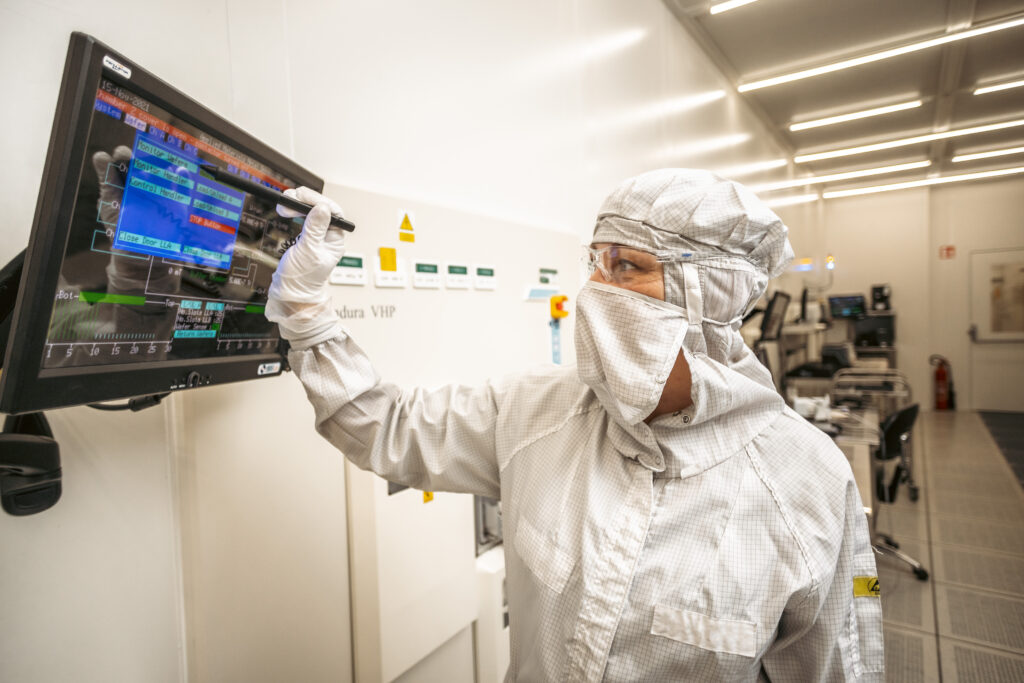
The center’s goal is to support the creation of semiconductor startups and contribute to the development of small and medium-sized companies. The key role of large companies such as Onsemi is to share industrial competencies and unique technological know-how, thereby helping smaller Czech companies to grow within the complex semiconductor value chain.
Inspiration in this regard can be found in the successful Czech company Codasip, which was founded in 2014 and is now one of Europe’s leaders in RISC-V, with global applications of developed processor architectures for billions of chips. Incidentally, Codasip founder Karel Masařík has become the director of the newly established semiconductor center. Negotiations are currently underway for the sale of Codasip, which could be the first major and successful exit in the semiconductor segment in the Czech context.
The Brno design center Onsemi also has an interesting story. It was established in 1994 as a spin-off of the Brno University of Technology in cooperation with the Belgian research organization IMEC. From 1997, the center grew as part of the Alcatel group, and by 2006 it was already the most important design center of AMI Semiconductor in Europe. In 2008, AMIS became part of Onsemi, and today the Brno design center, with its two hundred experts, is a global center of excellence in the field of semiconductor solutions for intelligent sensing. With their 150 international patents, the center’s developers are behind Onsemi’s leading position in the field of sensors for automotive and industrial applications.
Semiconductors are the cornerstone of the development of artificial intelligence and quantum technologies – two key areas that will shape our economy, competitiveness, and security in the coming decades. And it is precisely in these areas that the Czech Republic has real potential: from the development of specialized chips for AIDC (AI Data Centers) and semiconductor systems that will enable highly efficient power supply for energy-intensive infrastructure, through components for quantum technologies, to research facilities at universities such as the Brno University of Technology, the University of West Bohemia in Pilsen, and the Technical University of Ostrava.
The window of opportunity is limited in time
If we want to succeed in the European and global context, we must act consistently – in terms of effective public investment, talent support, technology transfer, and research industrialization. Investments in the semiconductor system are costly, but their rational return – economic, technological, and geopolitical – is clear and demonstrable in the long term. We see the role of the Czech National Semiconductor Cluster precisely in the effective use of our resources to achieve the maximum possible benefits. The quantification of our plans is expressed in the main objective of the National Semiconductor Strategy to triple the performance of our semiconductor industry by 2029 (compared to 2024).
 Despite a number of known problems and risks, the current era presents attractive technological opportunities that may never arise again in the future on this scale, so it is necessary to seize them in time. Barriers to entry into new technology sectors are growing over time, and what is possible today will require many times more resources tomorrow. These are opportunities not only for the semiconductor system itself, but also, given its scope of application and interconnection with AI, quantum technologies, and energy system challenges, for the Czech Republic as a whole.
The author, Michal Lorenc, is vice president of the Czech National Semiconductor Cluster, member of Czech Semiconductor Centre, and representative of onsemi.
Photos: onsemi